
Family Dining · Practical guide
Fujiya Camera
A Guide to Nakano’s Four Camera Shops, Used Lenses and Warranty Rules
Prices, ordering steps, payment details, and common mistakes — in one place.
Quick Facts
Last checked against official information: 2026-11-13.
| Category | Detail |
|---|---|
| Japanese name | フジヤカメラ (Fujiya Camera) |
| Brand Name | Fujiya Camera / フジヤカメラ (株式会社フジヤカメラ店 / Fujiya Camera Co., Ltd.) |
| Store Type | Long-running Nakano retailer of new and used cameras, photographic lenses, video equipment, tripod and bag accessories, and junk parts in four specialist shops. |
| Target Audience | Photographers, second-hand lens buyers, film-camera hobbyists, video creators and travelers comparing equipment and condition grades. |
| Ordering Style | Inspect each display item and its condition notes; ask staff whether mounting or testing a particular lens on your own camera is allowed. Verify compatibility, accessories, and warranty at the counter before paying. |
| Membership Required? | No membership is needed for ordinary walk-in purchases. For a Fujiya tax-free sale, present the original passport or other documentation permitted for your residency category, and confirm that this outlet can register the purchase under the November 2026 system. |
| Verified Listing Examples (November 12, 2026) | Used Nikon AI Nikkor 50mm f/1.4S lens ¥50,600; new Voigtländer NOKTON classic 35mm F1.4 II MC VM lens ¥56,790; used Sony α7C II black camera body (AB condition) ¥209,000; used DJI RS 3 Mini gimbal (AB) ¥22,000; used GITZO GK1545T-82TQD Traveler tripod kit (AB) ¥66,000. All prices include tax; stock and prices change. Junk Store prices vary by item; check the in-store labels. Tax-free purchases generally require at least ¥5,000 excluding tax in eligible goods from a participating store. |
| Multilingual Support | Fujiya Camera publishes an English visitor tax-free guide, but English-speaking sales staff and English technical labels at every counter are not established. Bring the product code and use translation support as necessary. |
| Payment Methods | The official store guide lists cash, Visa, Mastercard, JCB, American Express, Diners Club, UnionPay, debit cards, transport IC e-money, iD, QUICPay, PayPay, Amazon Pay, Alipay and WeChat Pay. Bank transfers, cash on delivery and financing belong to different transaction routes; actual options for the counter and purchase must be confirmed. |
| Store Network | Four named Nakano locations: Main Store, Video Store, Supplies Store and Junk Store. Video and Supplies occupy different floors of the same building; the four shops are not four separate buildings. See the official addresses and hours in Step 1. |
What it is
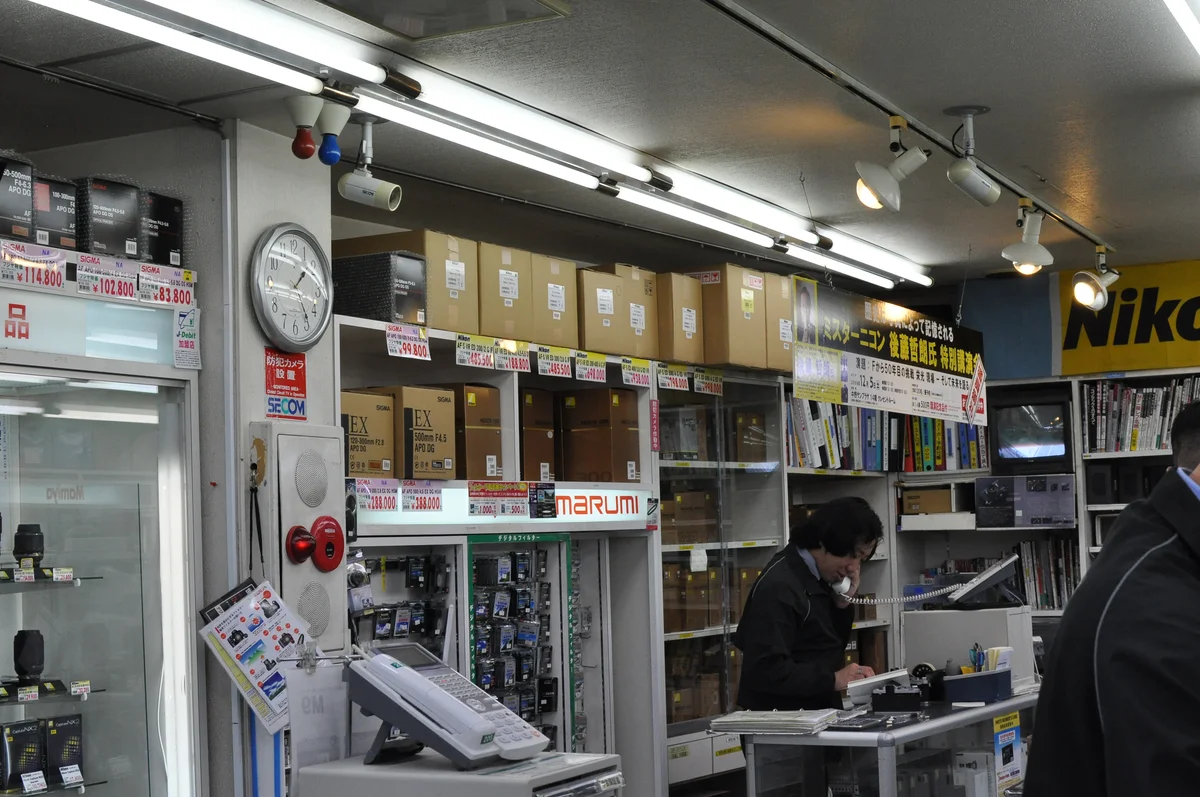
Fujiya Camera traces its business to 1938, when its predecessor, Otsuki Taiyodo, opened as a photographic-materials shop in Nakano. The company Fujiya Camera Co., Ltd. was incorporated in August 1946. Its Main Store moved to its current site in 1997; the Supplies Store opened that year, the Junk Store in 2002, and the Video Store in 2020. This development explains the four nearby specialist shops without suggesting the same corporation operated uninterrupted since 1938. Nakano Broadway is a nearby landmark, not the address of these four Fujiya Camera units.
Fujiya Camera’s official directory lists four places concentrated near Nakano Station’s North Exit:
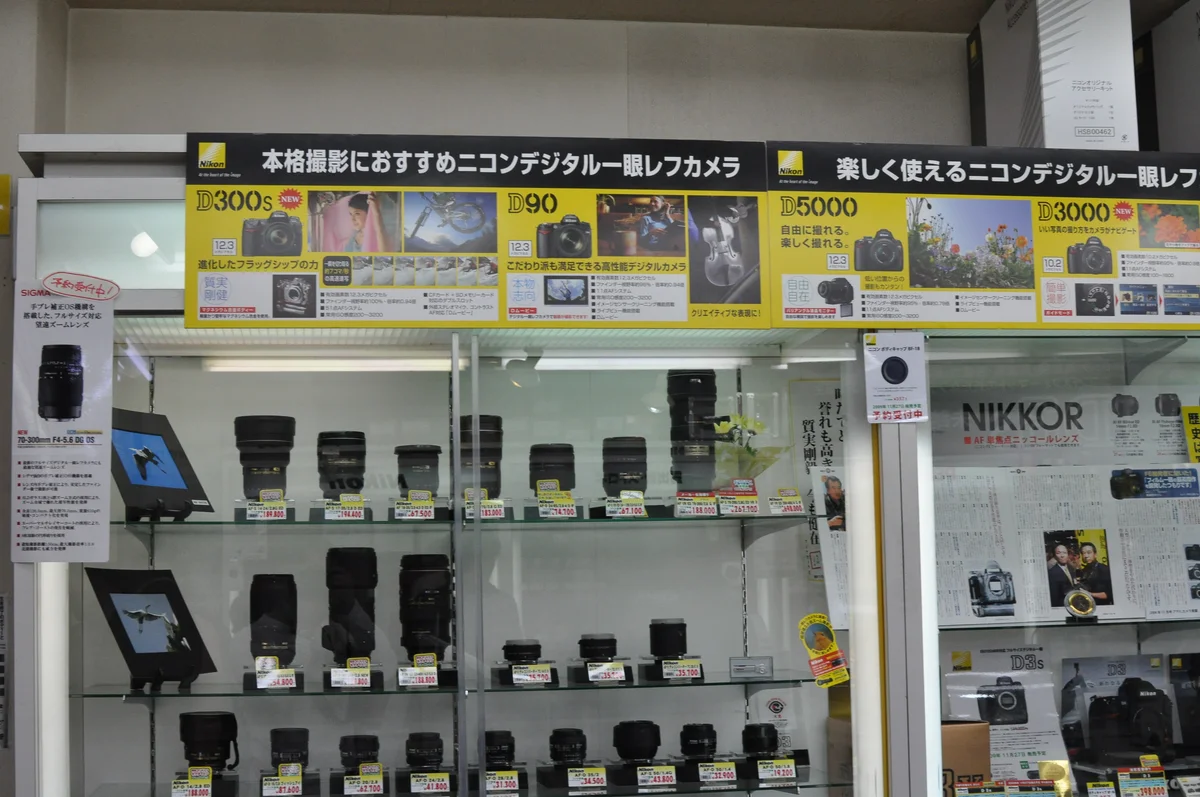
- Main Store (本店): 5-61-1 Nakano, Nakano Tatsumi Building, 1F and 2F, 10:00–20:30. Digital, film, medium- and large-format cameras plus new and used lenses.
- Video Store (動画館): 5-62-9 Nakano, KIK NAKANO 1st Building 1F, 10:00–20:30. Video cameras, production and streaming gear, microphones and monitors.
- Supplies Store (用品館): 5-62-9 Nakano, 2F of the same building as Video, 10:30–20:30. Tripods, camera bags and studio support equipment.
- Junk Store (ジャンク館): 5-63-5 Nakano, 10:30–20:30. Junk parts, used filters and lens cases, and photography books.
Used stock is frequently changing. The company says its Main Store handles over 2,000 used-camera/lens items, but this is a store’s general description, not a live in-stock count or a promise of every model. Check the official location page on the day of your visit.
How to order
Step 1: Find the Stores from Nakano Station
- Take the JR Chuo or Chuo-Sobu Line or Tokyo Metro Tozai Line to Nakano Station and use the North Exit. Consult the official store map for your route rather than relying on an unverified two-minute walk.
- For the Main Store, navigate to 5-61-1 Nakano. Video and Supplies share 5-62-9 Nakano on the first and second floors respectively; the Junk Store is at 5-63-5 Nakano.
- Official posted hours: Main and Video 10:00–20:30; Supplies and Junk 10:30–20:30. Verify holiday or temporary changes before the trip.
Step 2: Choose the Shop for the Equipment You Want
- Main Store handles new and used cameras and lenses, including digital, classic and larger-format items. Examine the grade label and note any listed defects.
- Video Store is for cameras, gimbals, monitors, microphones and production/streaming accessories.
- Supplies Store has tripods, bags and studio support equipment; go to 2F of the Video Store building, not a separate building across the street.
- Junk Store focuses on junk items, used filters/lens cases and books. Defective and collection-grade goods can have no store used-item warranty. Ask about the actual item’s condition and the seller’s terms.
Step 3: Check Condition and Compatibility
- Fujiya Camera grades used equipment A, AB+, AB, AB− and B and separately labels some as-is/partially faulty and collection items. These are retailer-defined condition descriptions; the cosmetic grade alone does not ensure fault-free mechanics.
- Its official FAQ says it conducts basic appearance and operation checks but does not perform a complete real-film or memory-card test exposure for every used body and lens. Test the item promptly after purchase and before any important shooting.
- Bring your camera if it helps check lens mount and electronics, but ask staff before touching, mounting or testing a display item; a free unlimited trial of any lens is not guaranteed.
- For eligible used cameras/lenses/related products priced at ¥11,000 or more tax-included, Fujiya generally issues a six-month store used-item warranty, subject to detailed exclusions. Accessories, particularly marked items, as-is and collection items may be excluded. The in-store initial-defect reporting period is 10 days after purchase (mail-order: 14 days after dispatch), distinct from the six-month limited warranty.
Step 4: Checkout and the 2026 Tax Refund
- Fujiya Camera publishes an English page advertising tourist tax-free shopping. However, on November 12, 2026, that page still described the pre-November 2026 system, including a passport-attached purchase document and an after-security Customs desk. Those old instructions are not valid for purchases under the new refund system. Confirm that the selling Fujiya counter can register your particular purchase and ask which provider and refund method it actually uses.
- For an eligible nonresident buyer, the minimum purchase generally is ¥5,000 excluding tax in qualifying goods from the participating retailer on the same day. Present the required original travel/residency documents at checkout. Pay the full price including tax first, and have the seller complete the prescribed electronic tax-free registration.
- From November 1, 2026, the former General Goods / Consumables distinction was abolished for this scheme. Cameras, lenses and other eligible items may generally be used during the visit, but must be carried out of Japan and meet all tax-free conditions.
- Complete the required Customs export confirmation within 90 days of purchase, before checking any goods Customs may inspect into airline baggage. Have your passport and tax-free items available for inspection.
- After valid Customs confirmation, Fujiya Camera or its designated refund operator must return the qualifying tax amount according to the store’s actual terms. Do not assume airport cash pickup or an automatic credit-card reversal. Fujiya’s published English guidance has not been updated to specify its new payout method; ask the cashier to show the current refund terms before purchasing.
What to order first
1. Vintage Japanese Manual-Focus Prime Lenses
- Japanese Name: オールドレンズ / AI ニッコール (AI Nikkor)
- Verified listing example: Used Nikon AI Nikkor 50mm f/1.4S (AB−), ¥50,600 tax included on Fujiya Camera’s official used SLR-lens catalog, checked November 12, 2026; this is an item example, not an all-model range.
- Why It Is Worth Considering: Fujiya sells older Nikkor and other manual-focus lenses. Their focus ring feel and rendering can be distinctive, but inspect the exact lens for haze, fungus, scratches and focusing faults. Confirm mount compatibility and any required adapter. Fujiya’s cosmetic grades and basic testing are not a guarantee that every optical defect is absent.
2. Leica M-Compatible Voigtländer and Leica Rangefinder Lenses
- Japanese Name: ライカM / フォクトレンダー NOKTON クラシック VM
- Verified listing example: New Voigtländer NOKTON classic 35mm F1.4 II MC VM, ¥56,790 tax included, checked November 13, 2026. The retailer identifies its VM mount as Leica M-compatible; a different Voigtländer Z, E or X lens is not automatically M-compatible.
- Why It Is Worth Considering: Fujiya’s catalog includes modern VM-mount Voigtländer lenses and Leica M-mount optics. Check rangefinder coupling, adapter compatibility, focus calibration and the exact mount for your camera before paying; broad claims about inventory, optical performance or international price superiority are not warranted for every unit.
3. Junk Store Parts, Filters, Lens Cases and Books
- Japanese Name: ジャンク館 / ジャンクパーツ・中古フィルター・レンズケース
- Price information: Prices vary by the actual in-store item. There is no fixed store-wide price range; check the shelf tag before choosing a part.
- Why It Is Worth Considering: The separate Junk Store at 5-63-5 Nakano explicitly carries junk parts, used filters/lens cases and photographic books. A label indicating as-is, a fault or collection-only status means the standard used warranty may not apply. Ordinary change-of-mind returns are not accepted, but the seller does not publish a blanket claim that every legal remedy for a defective item is excluded; ask about the classification of the exact purchase.
4. Video Production Gear and DJI Gimbals
- Japanese Name: 動画館 / DJIジンバル・映像制作用機材
- Verified listing example: Used DJI RS 3 Mini gimbal (AB), ¥22,000 tax included, from Fujiya’s official used gimbal/rig catalog, checked November 12, 2026.
- Why It Is Worth Considering: The Video Store, 1F at 5-62-9 Nakano, carries video, streaming, capture, stabilization, monitoring and microphone equipment. Match gimbal payload and compatible camera/lens combinations to the manufacturer’s stated requirements; do not assume staff work in film production or that every professional accessory is in stock.
5. Gitzo and Manfrotto Tripods and Heads
- Japanese Name: 用品館 / ジッツオ三脚・マンフロット雲台
- Verified listing example: Used GITZO GK1545T-82TQD Traveler kit, AB condition, ¥66,000 tax included, in Fujiya’s used-tripod catalog, checked November 12, 2026.
- Why It Is Worth Considering: The Supplies Store on 2F of the Video Store building sells tripods, bags and photographic support gear. Ask to inspect the tripod’s leg locks, carry weight and head fittings. The shop is not a separate building "right across the street," and the store has not promised unrestricted hands-on testing of every item.
Payment & practical info
- Accepted In-Store Methods: The store guide lists cash, Visa, Mastercard, JCB, American Express, Diners Club, UnionPay, debit cards, transport IC e-money, iD, QUICPay, PayPay, Amazon Pay, Alipay and WeChat Pay. Not every online or credit-financing payment route is available at the physical checkout. Ask whether a method can be used for the exact tax-free transaction.
- 2026 Tax-Free Refund: Fujiya has a tourist-taxfree page, but it still explains old pre-November 2026 departure handling. Under the law in force for purchases from November 1, 2026, qualifying buyers at participating sellers pay full tax-inclusive prices, register with acceptable documents and seek Customs export confirmation within 90 days; any refund is issued afterward by the retailer or its designated provider. General Goods is no longer a separate legal category. The English visitor page does not specify the current refund provider, payout timing, payment method or participating counters. Request the current terms at the selling counter before purchase.
- Operating Hours and Addresses: Main: 10:00–20:30 at 5-61-1 Nakano. Video: 10:00–20:30 at 1F, 5-62-9 Nakano. Supplies: 10:30–20:30 at 2F, 5-62-9 Nakano. Junk: 10:30–20:30 at 5-63-5 Nakano. Confirm special hours with the official store map.
- Used Camera/Lens Warranty: Eligible used cameras/lenses and related camera goods ¥11,000+ including tax normally carry a six-month store warranty; accessories, specifically noted faults, as-is and collection-grade items may be excluded. The store’s initial-defect window is 10 days for walk-in transactions and 14 days from dispatch for mail orders; the terms govern which remedy applies, not a blanket unconditional return right. Keep purchase evidence and perform an actual test shoot promptly.
- Nakano Broadway Side Trip: Nakano Broadway is nearby, and is not a Fujiya Camera retail location. Explore it as a separate destination after your camera shopping.
- Promotions: Offers and payment-linked campaigns are date- and product-dependent. Do not count on a special discount, card reward or unlimited tax refund without seeing the live written conditions.
Good to know / Common mistakes
1. Four Shopfronts, Three Buildings
The Main Store is at 5-61-1 Nakano, Video and Supplies share 5-62-9 Nakano on different floors, and Junk is at 5-63-5 Nakano. Visit the shop relevant to what you want to buy. Holiday hours can differ from the official 10:00–20:30 (Main/Video) and 10:30–20:30 (Supplies/Junk) postings.
2. The New Refund Procedure Allows Use, but Requires Export
The old General Goods tax-free classification was discontinued on November 1, 2026. Cameras, lenses and tripods may ordinarily be used during a trip, but a qualifying tax-free purchase must meet the new tax-inclusive-at-checkout, Customs confirmation within 90 days, and export requirements. Fujiya’s published English instructions describe the old procedure, so obtain its current registration and refund terms before relying on tax-free savings.
3. Junk and Used Items Need a Condition and Return Check
Fujiya’s used-product grades distinguish A, AB+, AB, AB−, B, as-is/partly faulty and collection-only items. The latter two are not covered by its six-month used warranty. The seller generally does not accept change-of-mind returns; its published initial-defect procedures require reports within 10 days for in-store purchases, subject to exclusions and product-specific circumstances. Keep the receipt and ask for the specific item’s defect notes. A missing accessory or a previously disclosed fault is not a surprise defect under the usual terms.
FAQ
Q1: How should I compare Fujiya’s used prices and condition grades?
A: Compare the exact model, cosmetic grade, accessories, stated defects and current price with competing listings rather than assuming Fujiya is always cheaper. Fujiya labels used goods A, AB+, AB, AB− and B; some items are explicitly as-is or collection-only. The store says its basic checks do not include fully exposing and processing a test roll or memory card for every used product. For eligible used gear priced at ¥11,000 or more including tax, a conditional six-month store warranty is available.
Q2: Can I bring my camera to check a used lens?
A: Bring the camera body and its exact mount specification, but ask staff whether a particular lens can be mounted and tested at the counter; no unrestricted universal test permission is established. Inspect the item's condition grade, warranty status and listed flaws. After buying, do a test shoot promptly: the company’s FAQ explicitly says its in-house used check does not include a complete test shot with film or a memory card for every item.
Q3: How do I receive a tax refund on a 2026 Fujiya Camera purchase?
A: Fujiya advertises tax-free shopping for eligible visitors, but its English page still contains pre-November 2026 instructions. Confirm at the exact selling counter that your transaction can be registered under the new refund scheme and ask for the store’s actual payout method and timing. Pay tax inclusive first, present the required travel/residency identification, and obtain the prescribed Customs confirmation within 90 days of purchase, before checking bags that contain tax-free items. The refund comes afterward through the seller or designated operator. Do not assume airport cash collection or automatic credit-card reversal.
Sources
- Fujiya corporate history (1938 predecessor, 1946 incorporation, annex openings) (checked 2026-11-12)
- Official four shops, distinct addresses, floors, hours and store payment list (checked 2026-11-12)
- Fujiya's tax-free visitor page: still contains obsolete pre-November-2026 steps (checked 2026-11-12; outdated for 2026 refund mechanics)
- Fujiya used-grade table, six-month limited used warranty and returns FAQ (checked 2026-11-12)
- Initial-defect 10-day in-store vs 14-day mail-order policy (checked 2026-11-12)
- Used online pickup and changing inventory (checked 2026-11-12)
- Used Nikon AI Nikkor 50mm f/1.4S ¥50,600 (checked 2026-11-12; single listing)
- New Voigtländer NOKTON Classic 35mm F1.4 II MC VM ¥56,790 and M-compatibility (checked 2026-11-13)
- Used Sony α7C II black AB ¥209,000 (checked 2026-11-12)
- Used DJI RS 3 Mini AB ¥22,000 (checked 2026-11-12)
- Used GITZO GK1545T-82TQD AB ¥66,000 (checked 2026-11-12)
- NTA post-2026-11-01 tax-inclusive and later export-confirmation refund (checked 2026-11-12)
- Japan Customs tax-free departure procedures (checked 2026-11-12)