
Sushi · Practical guide
Sushi no Midori
Tokyo's Legendary Queue-Worthy Edomae Sushi at Local Prices
Prices, ordering steps, payment details, and common mistakes — in one place.
Quick Facts
| Feature | Details |
|---|---|
| Japanese name | 梅丘寿司の美登利 (Sushi no Midori) |
| Category | Dining / Edomae Sushi, Chef's Counter, Set Menus & Takeout (Sushi no Midori Official Website) |
| Store Count | 8 full-service sushi restaurants in Japan: the Umegaoka flagship (Sohon-ten) in Setagaya, Tamagawa, Ginza, Shibuya (Mark City 4F), Akasaka (Biz Tower), Kichijoji (Atre), Nagoya (JR Gate Tower) and Nagoya Sakae Mitsukoshi; plus takeout counters and standing bars — 31 Japan locations in total on the official shop list, in Tokyo, Kanagawa and Nagoya (Official Shop List, checked 2026-11-11) |
| Ordering Style | Queue first, eat second: take a numbered ticket from the machine at the door (reception from 10:00), wait to be called, then order sets or piece-by-piece while the chefs shape each piece in front of you; pay at the register after the meal |
| Membership Required? | No membership and no ID required; the same-day numbered ticket is the default, but some seat reservations exist — TableCheck web booking at the flagship (weekdays) and a few other stores, and the Nagoya Sakae Mitsukoshi store takes reservations online only |
| Approximate Price Range | Single nigiri pieces ¥55–¥770 (tax incl.); the signature whole-anago nigiri ¥968; chef's sets ¥2,200 (Jo Nigiri) to ¥4,180 (Cho-Tokusen Nigiri); a filling lunch typically lands around ¥1,500–¥3,000 per person (official grand menu; subject to revision) |
| Payment Methods | Cash, major credit cards (including UnionPay), transit IC cards (Suica, PASMO), QuicPay and iD e-money, and QR payments at some stores (per official store pages) |
| Multilingual Support | A long-standing favourite of overseas visitors at the central-Tokyo stores; official information is published in Japanese, so bring a translation app for the full grand menu |
What it is
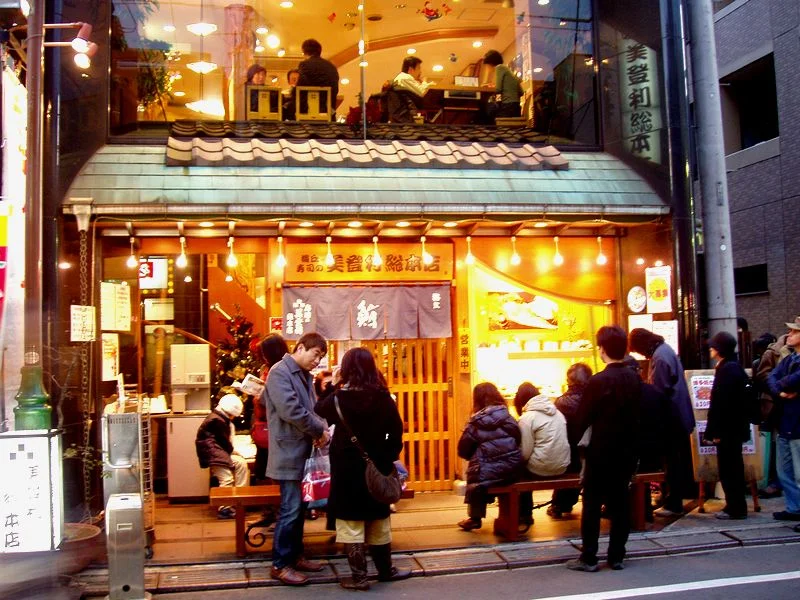
Sushi no Midori (梅丘寿司の美登利), run by Umeoka Sushi no Midori Sohon-ten Co., Ltd., is the sushi chain Tokyo locals queue for. Born in Umegaoka, a quiet residential neighbourhood in Setagaya, its promise is top-grade Edomae sushi, served until you are full, at prices ordinary people can pay. Fish comes in direct from Toyosu Market and is cut so generously that the topping drapes over the rice: the signature whole-anago (conger eel) nigiri arrives as one entire eel laid across the rice, the sea urchin and salmon roe gunkan overflow their seaweed walls, and the crab miso salad has become a cult side dish. The flagship draws lines so long that it runs a numbered-ticket system from an hour before opening — and people still come. This is not a conveyor belt and not a hushed ¥30,000 omakase counter; it is the boisterous middle ground where chefs hand you piece after piece at neighbourhood prices.
How to order
- Pick Your Store (Flagship Pilgrimage vs. Central Convenience):
- Umegaoka Flagship (Sohon-ten): The original, 128 seats, 1 minute from Umegaoka Station (Odakyu Line). Weekdays it splits into lunch (11:00–14:30, last order 14:00) and dinner (17:00–21:00); weekends and holidays it runs 11:00–21:00 straight through.
- Shibuya (Mark City 4F): 62 seats, open 11:00–21:00 (last order 20:30) with no midday break — the easiest store to combine with sightseeing.
- Ginza (82 seats) & Akasaka (Biz Tower 2F): Ginza splits weekday service (lunch to 15:00, dinner from 17:00); Akasaka runs latest, to 22:00.
- Get Your Numbered Ticket — This Is the Whole Game:
- Queue reception at the store starts at 10:00, a full hour before the 11:00 opening. Go to the ticket machine (発券機) at the entrance and take a numbered ticket (整理券). That number, not your place in a physical line, is your seat claim.
- On busy days the restaurant stops issuing tickets early once it judges that later numbers could not be seated before last order — a sold-out ticket machine at 13:00 on a Saturday is normal, not a malfunction.
- The official shop list page shows a live waiting status for the main stores, so check how deep the queue already is before you cross town.
- Smartphone Ticket (Shibuya Only, as Officially Documented):
- At the Shibuya store you can also queue from your phone: add the Shibuya store's official LINE account as a friend, tap webから順番待ち (queue from the web) in the menu, enter your party size and seat preference, tap issue — your ticket number appears on screen.
- Smartphone tickets are issued Monday–Friday, 10:00–19:30, for parties of up to 10 adults, and are only valid within roughly 1 km of the store — you cannot grab a number from across Tokyo.
- Do not assume this works elsewhere: the flagship and Ginza pages state plainly that smartphone queueing is not currently accepted there — machine ticket only.
- The Reservation Alternative (Limited, Store by Store):
- The flagship now takes TableCheck web reservations — weekday slots have been opened up widely, including weekday reservations for the 2nd-floor counter — and also accepts bookings by phone.
- Tamagawa takes reservations for table seats only (the counter cannot be booked); the new Nagoya Sakae Mitsukoshi store takes reservations online only via TableCheck — no phone bookings at all.
- Everywhere else, the numbered ticket is the system. There is no general phone booking for a casual walk-in meal.
- Wait, Then Eat:
- Watch the called numbers and be at the door when yours comes up; at Shibuya the restaurant asks guests to finish within about 2 hours.
- Once seated, order a set or call pieces one by one from the menu — the chefs work directly in front of the counter. You pay at the register after the meal.
What to order first
- Ganso Anago Ippon Nigiri (元祖穴子一本にぎり, ¥968 tax incl.): The original whole-eel nigiri — one entire simmered conger eel, glazed and laid over the rice, hanging off both ends of the plate. The single most famous item in the house.
- Cho-Tokusen Nigiri Set (超特選にぎり, ¥4,180 tax incl.): The top set — two pieces of medium-fatty tuna, seasonal white fish, giant red shrimp, raw snow crab, ark shell, sea urchin, salmon roe, the whole anago, egg and a negi-toro hand roll — with chawanmushi, a mini crab miso salad and dessert included.
- Seasonal Itasan Omakase Nigiri (季節の板さんおまかせにぎり): The chefs' seasonal showcase set, refreshed through the year (the winter edition runs from early November at the flagship, Tamagawa, Ginza, Shibuya, Akasaka, Kichijoji and Nagoya) — the easiest way to eat what is best that week.
- Kani Miso Salad (かにみそサラダ, ¥660 tax incl.): The signature crab miso salad that regulars order before the sushi even starts; a mini version rides along with the top sets if you want to taste it first.
- Gokujo Maguro Zukushi (極上まぐろづくし, ¥3,630 tax incl.): The all-tuna set — two fatty tuna, two medium-fatty, four lean, plus a negi-toro roll, with chawanmushi. Add an overflowing uni gunkan (¥605) or ikura gunkan (¥495) for the full Midori flex.
Payment & practical info
Prices and details checked: November 2026.
- Payment Accepted: Cash, major credit cards (UnionPay accepted), transit IC cards (Suica/PASMO), QuicPay and iD e-money; some stores also take QR payments and local gift certificates (全国共通すし券 / 美登利寿司券). The full list is printed on each official store page.
- Hours: Flagship — weekdays 11:00–14:30 (LO 14:00) and 17:00–21:00 (LO 20:30), weekends/holidays 11:00–21:00; Shibuya — 11:00–21:00 (LO 20:30), no break; Akasaka — 11:00–22:00 (food LO 21:00). Flagship, Ginza and Shibuya close on 1 January. Confirm your store on the official shop list.
- Tax-free: Not applicable. A restaurant meal is a service you consume in Japan, so tax-free shopping does not apply — no passport procedure, no refund; the consumption tax is simply included in the bill you pay at the register.
- Menu Prices: The official grand menu lists prices before tax with the tax-included figure alongside. It covers the flagship, Ginza, Tamagawa, Akasaka and Shibuya; Kichijoji and Nagoya differ slightly on some items (subject to revision).
- Ordering Style: Order sets or individual pieces from the menu; individual nigiri run from ¥55 (egg, squid legs) to ¥770 (premium sea urchin), so grazing is cheap and splurging is optional.
Good to know / Common mistakes
- Arriving at Noon Without a Ticket: The classic first-timer failure. Reception opens at 10:00 and weekend tickets can run out for the day — treat Sushi no Midori like a popular ride: ticket first, sightseeing after.
- Assuming the Smartphone Queue Works Everywhere: It is officially offered at Shibuya (LINE, weekdays, within ~1 km). The flagship and Ginza are ticket-machine only — no app will save you there.
- Confusing It with Katsu Midori: The conveyor-belt chain Kaiten-zushi Katsu Midori is a separate company — the official site says so explicitly. Different restaurants, different system.
- Skipping the Takeout Counters: The Umegaoka takeout shop and the counters inside Ozeki supermarkets sell Midori sushi to go with no ticket queue — the locals' shortcut when the flagship line is hopeless. The Echika Ikebukuro and Nihombashi branches add standing sushi bars for fresh-and-fast.
- Over-Ordering Up Front: Portions are famously oversized and the sets already include chawanmushi, salad and dessert. Order a set first; add single pieces after you see the scale of what arrives.
FAQ
- Q: Can I make a reservation instead of queueing?
- A: Sometimes. The flagship accepts TableCheck web reservations (weekday slots widely open, incl. the 2nd-floor counter) and phone bookings; Tamagawa books table seats only; Nagoya Sakae Mitsukoshi is online-only. Shibuya's practical route is the same-day ticket — at the machine from 10:00, or by smartphone via the store's LINE account on weekdays.
- Q: How long will I actually wait?
- A: It depends entirely on your ticket number and the day. The official shop list shows the current waiting status for the main stores, so check before you go; taking a ticket at 10:00 for the first seating is the only reliable way to keep the wait short, and ticket distribution can stop early on the busiest days.
- Q: I am a tourist — can I get the meal tax-free?
- A: No. Tax-free shopping covers goods you take out of Japan, not meals eaten in the restaurant. You simply pay the tax-included menu price at the register after eating, like every other guest.
Sources
- Sushi no Midori Official Website (Verified: 2026-11-11)
- Sushi no Midori Official Shop List (Verified: 2026-11-11)
- Sushi no Midori Official Grand Menu (Verified: 2026-11-11)
- Sushi no Midori Shibuya Store Page — Ticket System (Verified: 2026-11-11)
- Sushi no Midori Flagship (Sohon-ten) Store Page (Verified: 2026-11-11)