A castle in plain sight.
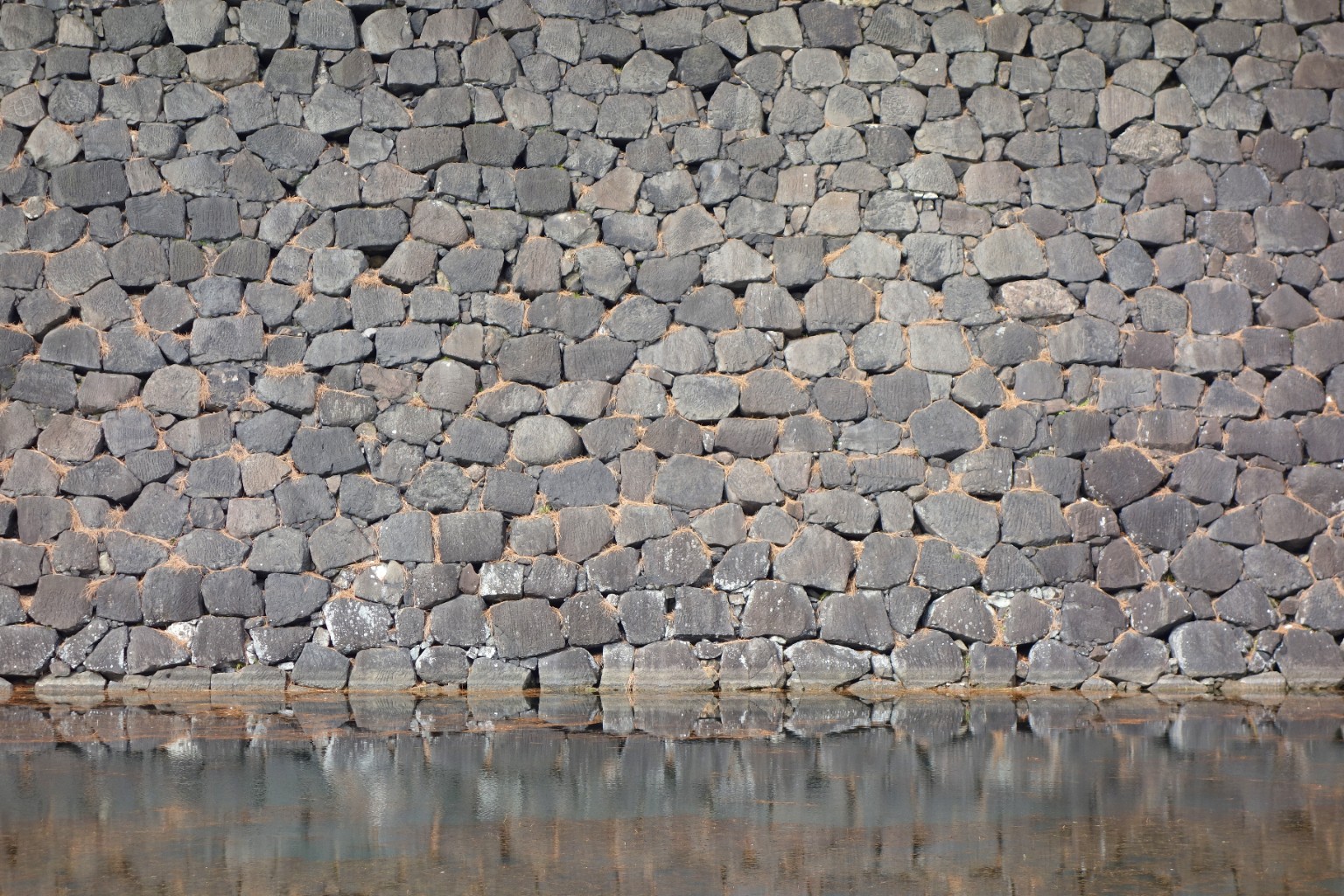
The bridges, gates and moats of Tokyo's Imperial Palace make familiar photographs. The stone walls often end up somewhere in the background. Take a closer look, though, and the walls become interesting in their own right: enormous blocks, unexpectedly neat corners, and patterns that change as you walk.
The Imperial Palace occupies part of the former Edo Castle, once the headquarters of the Tokugawa shoguns. Its great main tower burned down in 1657, when a fire devastated Edo—the city now called Tokyo—and was never rebuilt. The moats, gates and stone walls still give a sense of the castle's scale.
What the walls were for.
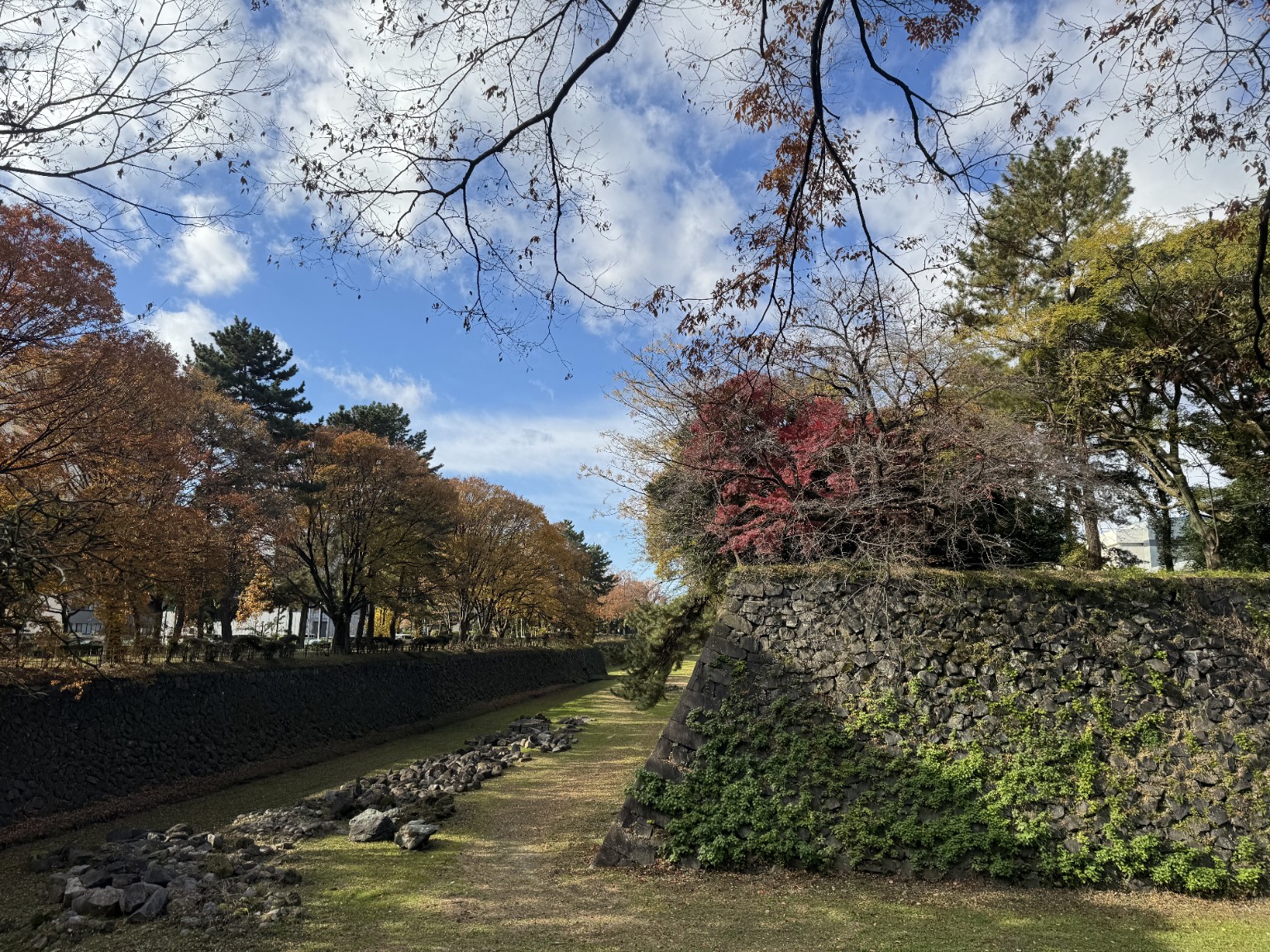
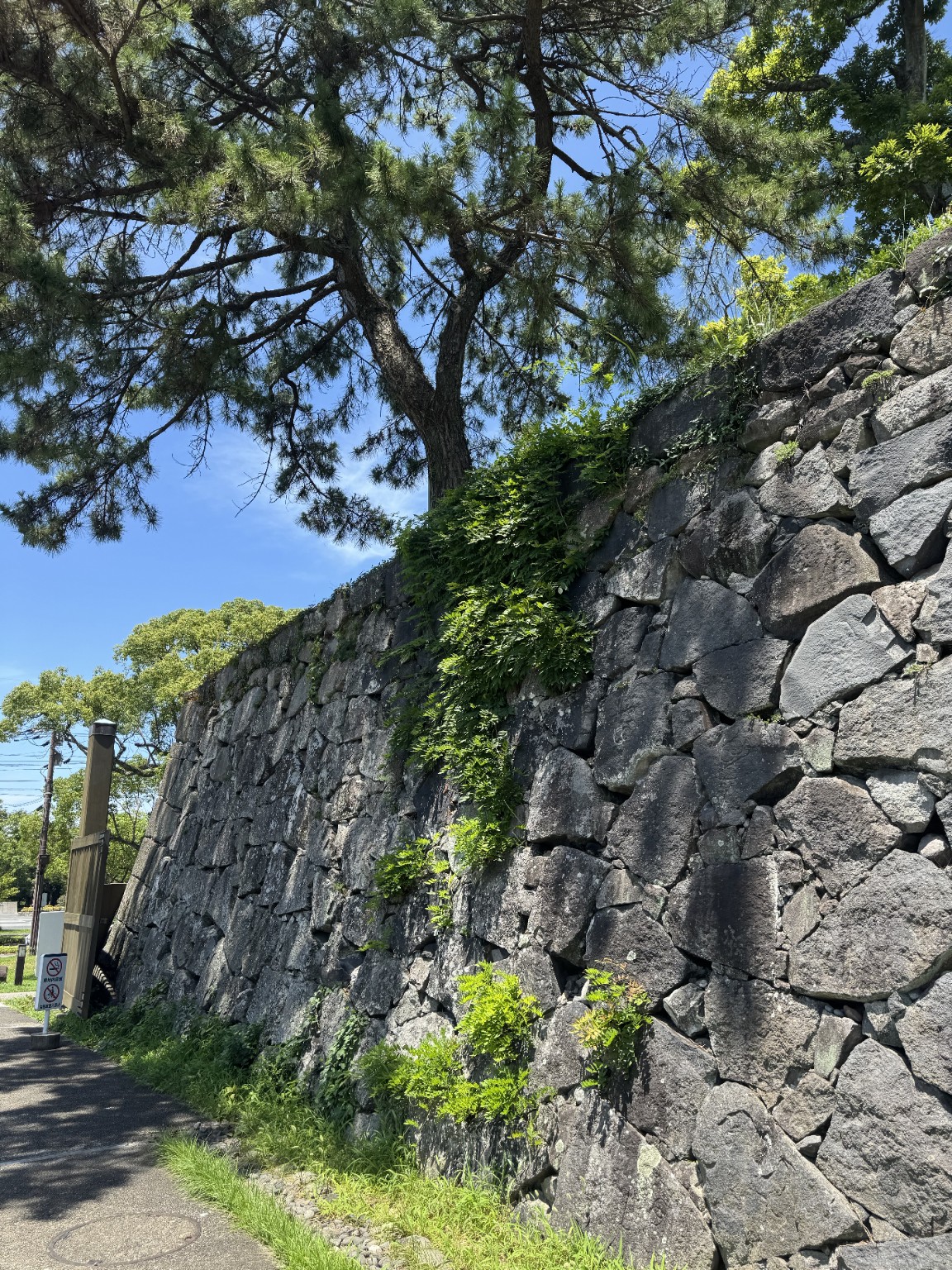
Many of Japan's most famous castles had wooden buildings rising above steep stone-faced earthworks. The walls held the raised ground in place, made steep approaches difficult for attackers and gave the castle an imposing appearance. During the late sixteenth and early seventeenth centuries, castle builders refined the art of fitting stone to stone, sometimes leaving rough outlines visible, sometimes cutting blocks into remarkably tidy shapes. At the corners, long stones could be laid in alternating directions to strengthen the wall.

There is a particularly good contrast inside the Imperial Palace East Gardens. On the east side of the gardens, beside Hakuchō Moat, older masonry has irregular outlines, with small stones tucked into the gaps. Between the two slopes called Shiomizaka and Bairinzaka, later builders fitted carefully dressed blocks into much more regular rows. The older wall is associated with Tokugawa Ieyasu's early castle; the newer one was built after the fire of 1657.


On the route inward from Ōte-mon, the Nakanomon stone walls mark the site of a vanished gate. Some of the blocks are huge: the largest are estimated at around 35 tonnes. Granite for these walls was brought from the Seto Inland Sea coast and the Kii Peninsula, far from Tokyo. A wall that looks so solid and permanent once began with a great deal of cutting, hauling and moving.
People who look at walls.
In Japan, some castle enthusiasts pay as much attention to stonework as to towers. They notice the way corners fit together, marks left on the stones, or a particularly pleasing arrangement of different sizes. A stone wall can reward a second look even when you know none of the technical terms.
The craft is not entirely a thing of the past, either. In Shiga Prefecture, stonemason Suminori Awata continues a tradition associated with the Anō-shū, a group known for fitting natural stones together. He recalls spending his early apprenticeship searching for small stones that would fit the spaces in his grandfather's masonry. He speaks of learning to hear the voice of a stone—to recognise where an irregular piece belongs. His tradition uses natural stones rather than the more carefully dressed blocks seen in parts of the East Gardens. His attention to how each stone fits is something you can look for here, too.
You do not need to plan a special tour of the stone walls. On an ordinary walk around the Imperial Palace, notice one corner, a line of joints, or a block much bigger than the person passing it. Perhaps you will stop for one more photograph—of the stones, or of your travelling companion with the old castle walls as a backdrop.
At the next castle you visit elsewhere in Japan, the stone walls may be the first thing you notice.
Before you go.
Getting there: Ōte-mon Gate is about a five-minute walk from Otemachi subway station (exit C13a), or around fifteen minutes from JR Tokyo Station (Marunouchi North Exit). For Hirakawa-mon Gate, use Takebashi station on the Tozai Line (exit 1a), about five minutes away. These are gates into the East Gardens, not entrances to the Imperial Palace itself. For the official gate map, see the Imperial Household Agency’s access information.
You can see historic walls around the Imperial Palace from public paths. To compare the stonework beside Hakuchō Moat and between Shiomizaka and Bairinzaka, visit the Imperial Palace East Gardens, where admission is free. The gardens normally close on Mondays and Fridays (with holiday exceptions), and from 28 December to 3 January. Check the Imperial Household Agency's visitor information for opening days, hours and temporary restrictions. Personal snapshots need no permit, but photography intended for publication or commercial use is subject to separate restrictions.
Research and further reading: Tokyo Metropolitan Government's Imperial Palace walk; National Gardens Association on stonework; Visit Chiyoda on Nakanomon Gate; Interview with stonemason Suminori Awata.