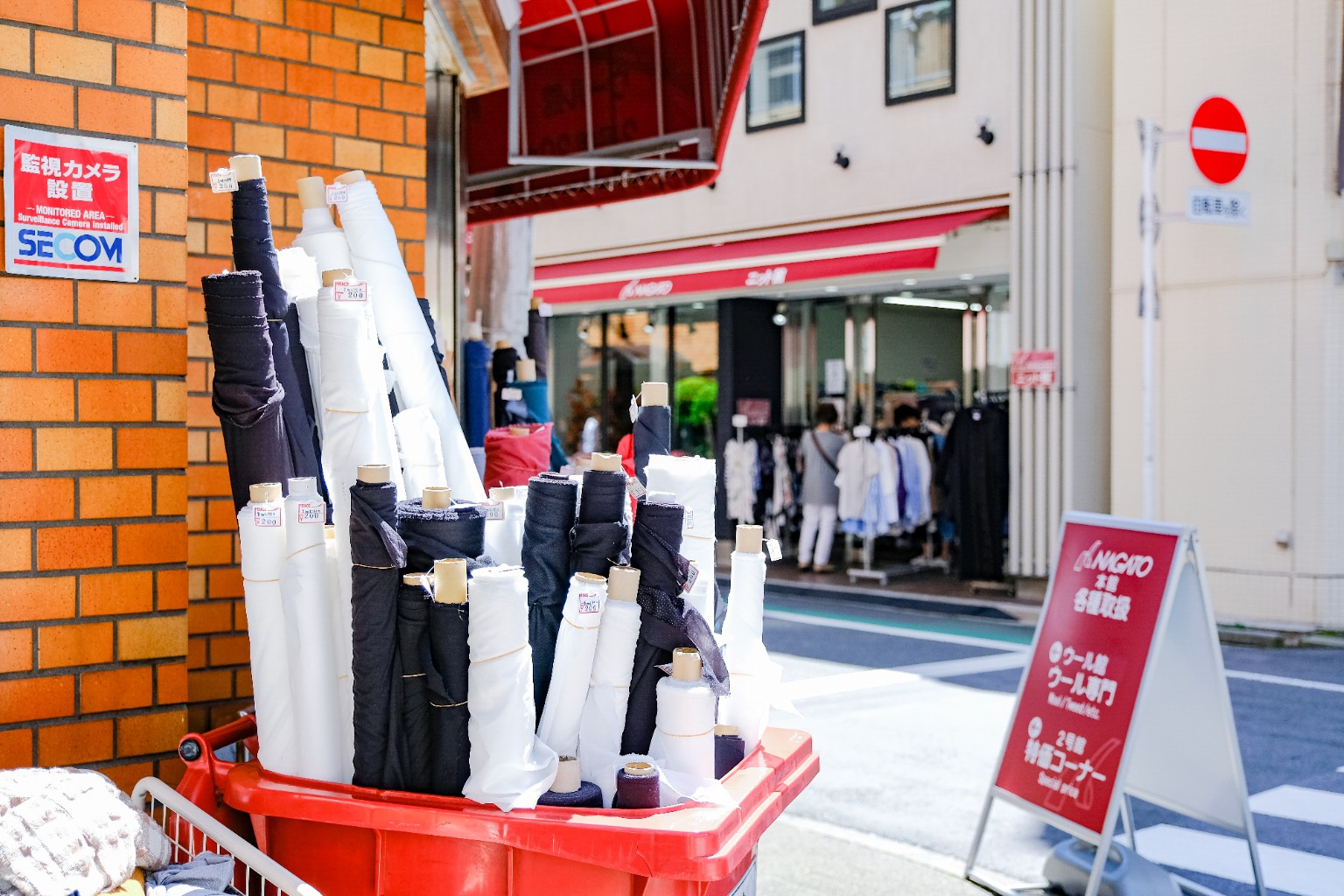
What a street can be made of.
A few minutes east of Nippori Station is a shopping district where bolts of cloth stand in shopfront displays and sewing supplies are a business in their own right.
This is Nippori Fabric Town. The district runs for roughly a kilometre along Nippori Chuo-dori and the surrounding streets, with around ninety specialist shops.
Start with the fabrics. Some shops display patterned cottons and Japanese-style designs; others deal in plainer materials, leather or supplies for sewing and crafts. Look at the differences between neighbouring storefronts. Rolls of fabric, displays of lace, buttons and ribbons: the materials that go into a finished shirt, dress or bag are right in front of you. At some shops, the fabric is priced by the metre.
Think about the clothes in a shop window. Someone has already decided their colour, texture and shape. In Nippori, you can see some of the choices that come before that decision. A pattern you would never wear could look wonderful on a cushion. A piece of fabric might suggest a bag, a costume or a curtain. The street gives you plenty to imagine, even if you leave empty-handed.
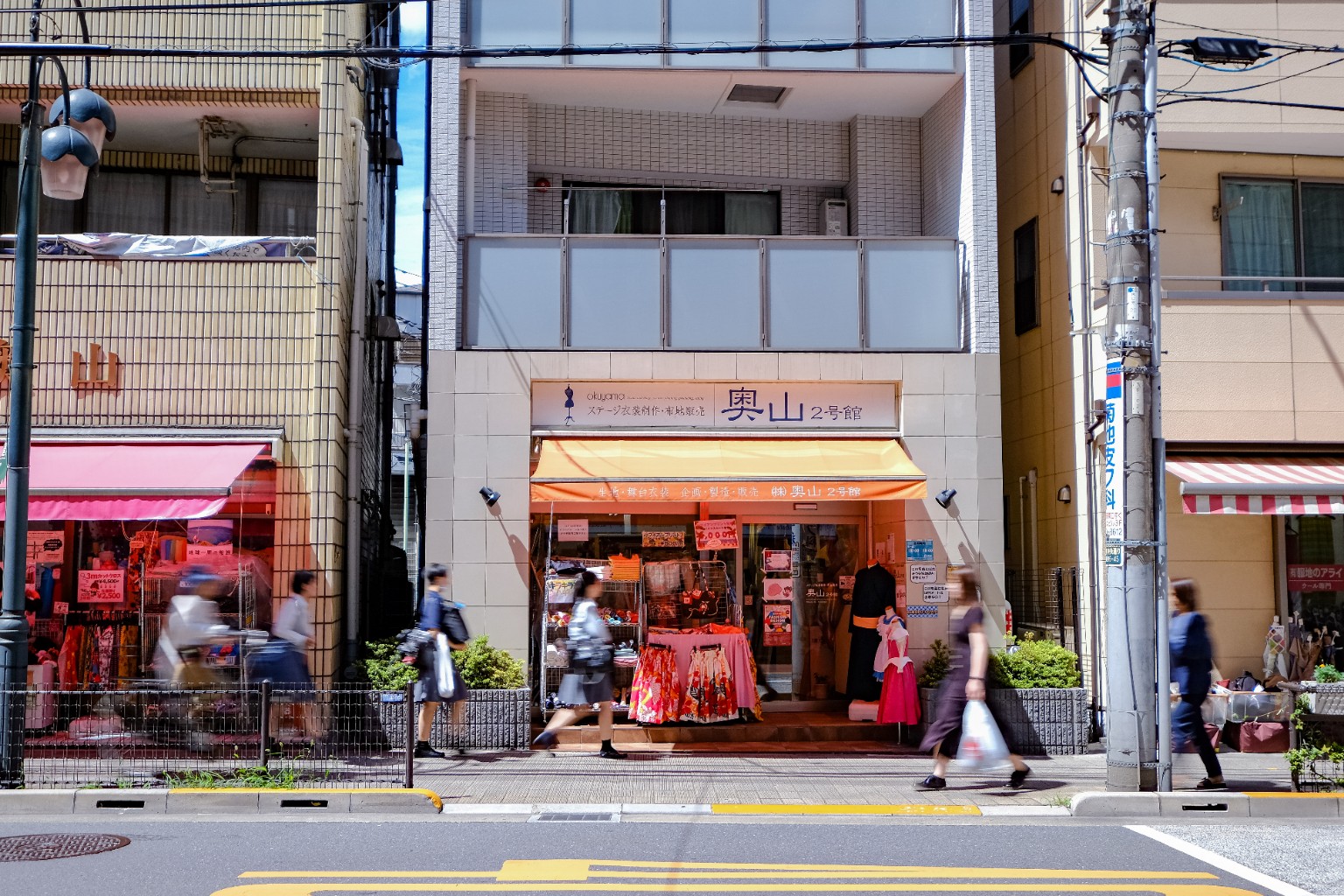
Why is it here?
Nippori's textile trade goes back to the early Taisho era, in the 1910s. Textile merchants moved here from the Asakusa area. Many of them dealt in surplus stock, end-of-line material and fabric offcuts, largely selling to other businesses. Over time, more shops began serving individual customers alongside professional buyers.
That history is easy to overlook when you are choosing between patterns or peering into a shop. But it helps explain the district's mixture of specialist trade and everyday shopping. Students, sewing enthusiasts and people in the clothing business can all come looking for materials. Some stores have a narrow speciality, so a neighbouring shop may offer something quite different.
Keep your eyes open.
Look at what the shops put outside. One drapes patterned cloth over a mannequin as though it were already a dress. Another sets out rolls of lining, while sewing threads stand in neat rows close to the door. Walk a little further and you find fabric for stage costumes, leather for bags, and parts you may never have known you could buy separately.
This is a working shopping street. Many shops welcome individual buyers, but opening hours differ, and some focus on trade customers. If you want to take photographs inside a store, ask first.

You may not sew or do any kind of craft. You may even wonder what this street has to do with you. Then a colour catches your eye. A pattern makes you stop. You find yourself wanting to feel a piece of cloth and wondering what you could make with it.
So here is one warning before you enter Nippori Fabric Town: you might leave with a new hobby.
More streets with a specialty.
Nippori is one of several Tokyo districts where particular kinds of shops gather together. In Kappabashi, the shops specialise in kitchenware, knives and remarkably realistic food samples. Jimbocho draws readers to its second-hand bookshops, while Ochanomizu has a concentration of musical-instrument dealers. And in Torigoe, the 230-metre Okazu Yokocho takes its name from the prepared side dishes once sold to families working in nearby small factories.
The next time you pass a row of similar shops in Tokyo, take a closer look at what they sell.
Before you go.
Nippori Fabric Town begins about three minutes’ walk from JR Nippori Station’s South ticket gate, on the eastern side of the station, and is centred on Nippori Chuo-dori. Follow the signs along the route. Many shops are closed on Sundays, and individual hours vary. For the greatest choice of stores, plan a visit on a weekday or Saturday and check any particular shop you intend to visit. Furatto Nippori, a public facility within the district, has a visitor information counter and a place to rest.
Research and further reading: GO TOKYO (Nippori Fabric Town); Nippori Fabric Town Association (history); Official walking tour (shopfronts and merchandise); Taito City (Okazu Yokocho).