
Family Dining · Practical guide
Fujiya
Peko-chan, Premium Shortcake & Japan's Classic Sweets Shops
Prices, ordering steps, payment details, and common mistakes — in one place.
Quick Facts
Last checked against official information: 2026-11-12.
| Feature | Details |
|---|---|
| Japanese name | 不二家 (Fujiya) |
| Category | Western confectionery shops (cakes & sweets, takeout) plus Fujiya Restaurant family restaurants (dine-in) (Fujiya Official Website) |
| Store Count | 815 Fujiya sweets shops in Japan as of the end of September 2026, per Fujiya's official earnings report — plus about 35 Fujiya Restaurant locations (including the Anpanman & Peko's Kitchen format) and a growing Peko-chan milky donut shop line (Fujiya Company Outline) |
| Ordering Style | Sweets shops: choose at the glass showcase, staff box your cakes, pay at the register. Restaurants: sit down, order at the table (touch panel or staff), eat, then pay at the register on the way out |
| Membership Required? | No membership, account or reservation required at sweets shops or restaurants |
| Approximate Price Range | Sweets shops: Peko-chan no Hoppe ¥166; Premium Shortcake ¥667; most cakes ¥400–¥700 including tax. Restaurants: mains roughly ¥1,000–¥2,500 with drink-bar and dessert options (official product prices, checked November 2026) |
| Payment Methods | Cash, major credit cards, transit IC cards (Suica, PASMO) and QR payments at most locations — the exact mix varies by store, as many sweets shops are franchised |
| Multilingual Support | Photo menus and picture product cards throughout; some restaurants use touch-panel ordering. Little spoken English, but pointing works everywhere |
What it is
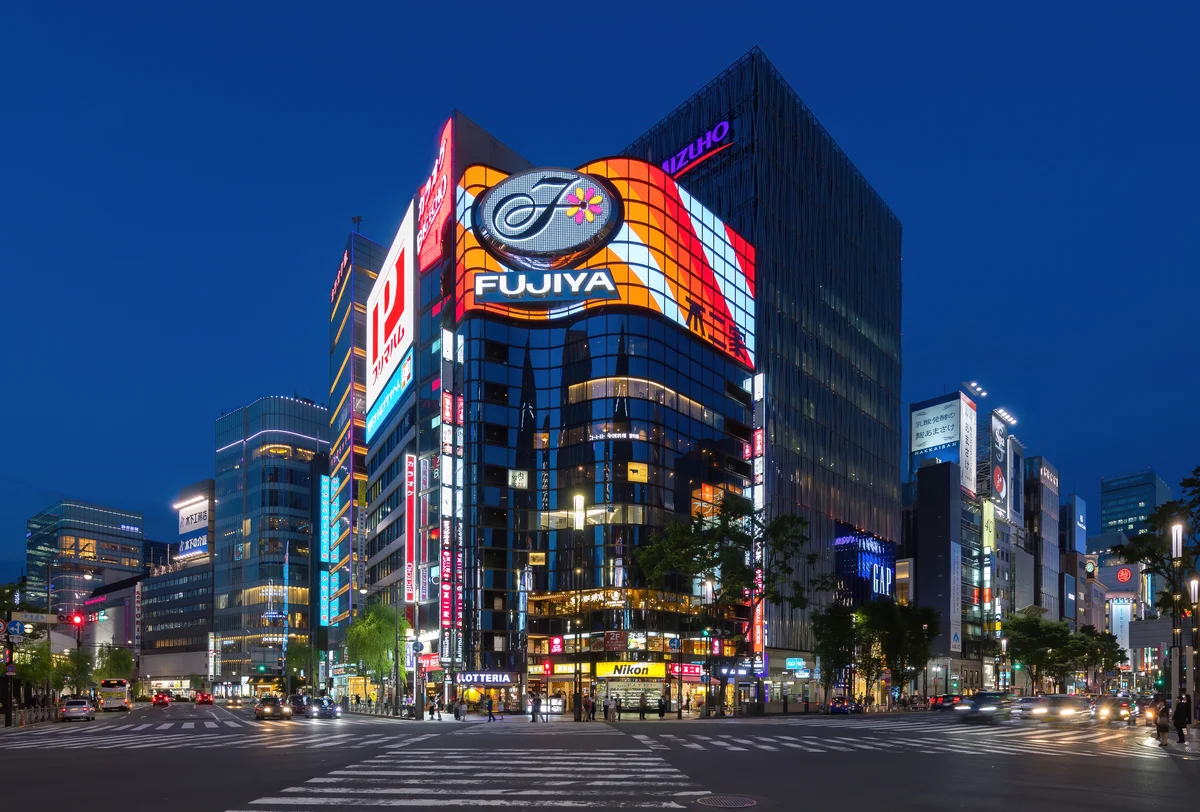
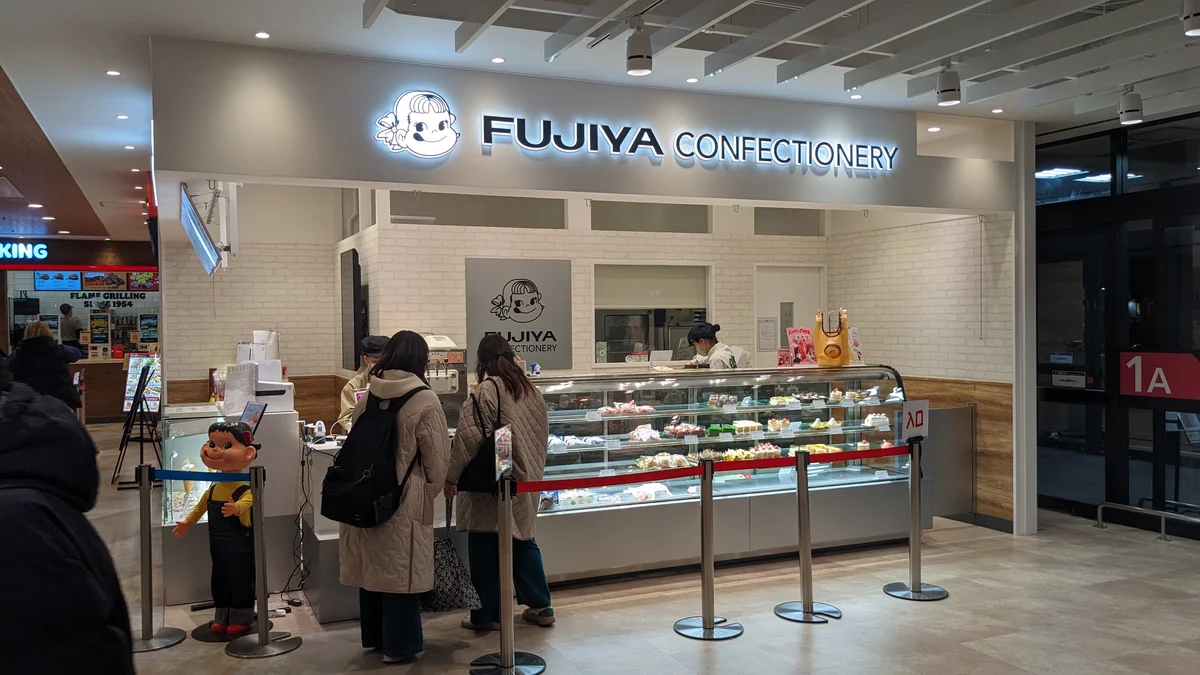
Fujiya (不二家) is the company that taught Japan to eat Western cake. Founded in 1910 as a small Western-sweets shop in Yokohama's Motomachi district, Fujiya has sold strawberry shortcake for over a century — its own releases count 103 years of shortcake in 2025 — and turned it into Japan's default celebration cake. Its mascot, Peko-chan, the girl with her tongue sticking out, arrived in 1950; the milky caramel candy Milky followed in 1951. A life-size Peko-chan figure stands outside sweets shops all over the country, and for Japanese people she is pure childhood: birthday cakes, Christmas cakes and after-school treats all wear her face.
Today Fujiya — a subsidiary of Yamazaki Baking, Japan's biggest bread maker — runs three things a visitor will meet. First, the Fujiya sweets shops (不二家洋菓子店): 815 neighbourhood cake shops selling shortcake by the slice, cream buns, puddings, gift boxes and packaged Fujiya classics such as Milky, Country Ma'am cookies, LOOK chocolate and Home Pie. Second, Fujiya Restaurants: retro family restaurants serving Japanese-style Western food (yoshoku) — hamburg steak, pasta, parfaits — usually with a Fujiya sweets corner attached for takeout cake. Third, newer formats such as the Peko-chan milky donut shops. Fujiya is not luxury patisserie; it is something more interesting — the everyday taste of Japanese birthdays for more than a century.
How to order
- At a sweets shop — pick from the showcase:
- Fresh cakes are displayed in a glass case with name and price cards. Point at what you want and show the quantity with your fingers; staff box everything with an ice pack for the trip.
- Shelves around the shop hold the packaged goods — Milky, Country Ma'am, LOOK, gift assortments — which you carry to the register yourself.
- Whole birthday and Christmas cakes can be reserved in advance at the counter.
- At a Fujiya Restaurant — sit down and order at the table:
- You are shown to a seat; order from the picture menu via touch panel where fitted, or call staff with the table bell/button.
- Many lunch sets add a drink bar; desserts are Fujiya's own cakes and parfaits — the restaurant is a sweets shop you can sit inside.
- Pay at the register near the exit after your meal, not at the table. Many restaurants have the takeout sweets corner by that register, in case the display case wins on your way out.
- Know your location type before you go:
- Sweets shops are everywhere — station fronts, shopping streets, inside malls and supermarkets. Restaurants are far fewer (about 35) and mostly suburban, with a few famous city sites such as the Ginza Sukiyabashi restaurant and one inside Narita Airport Terminal 1 (5F).
What to order first
- Premium Shortcake (プレミアムショートケーキ) — ¥667: Fujiya's No.1 seller and the archetype of Japanese shortcake — two layers of strawberry and light chantilly cream in soft sponge. This is the cake Japan grew up on.
- Peko-chan no Hoppe (ペコちゃんのほっぺ) — ¥166: A palm-sized bun of honey sponge packed with custard (or chocolate) cream, stamped with Peko-chan's cheeky face. The classic Fujiya snack — the name means "Peko-chan's cheek."
- Milky (ミルキー): The 1951 condensed-milk candy in the red Peko-chan wrapper — soft, milky, and sold absolutely everywhere in Japan. Buy the bag at a Fujiya shop for the full range of flavours.
- Country Ma'am & LOOK Chocolate: Fujiya's supermarket-famous cookies and chocolate bars, stocked in the shops in gift boxes — the easy, unbreakable souvenir haul.
- At a restaurant — Hamburg Steak & a Parfait: Order the yoshoku staple (hamburg steak with demi-glace is the Shibuya store's signature set) and finish with a Fujiya parfait or a slice of the day's cake; the attached sweets corner covers take-home.
Payment & practical info
- Payment Accepted: Cash everywhere; most shops and restaurants also take major credit cards, Suica/PASMO and other transit IC cards, e-money and QR payments — franchised sweets shops vary, so check the register stickers.
- Hours: Sweets shops typically open around 10:00 AM–8:00/9:00 PM; restaurants around 11:00 AM–9:00/10:00 PM. Both vary by location — confirm on the official store search.
- Takeout vs eat-in tax: Fujiya's own price notes flag a classic Japan trap — cakes eaten in a shop's eat-in space are taxed at the standard 10% rate, while the same cake taken out is 8%, so eat-in prices can differ slightly from the shelf tag.
- Tax-free — refund method (checked 2026-11-11): Fujiya does not publish tax-free shopping information for its sweets shops or restaurants on its official website, and no official in-store tax-free offer could be confirmed as of this check — do not count on tax-free shopping here, and ask at the register of the individual shop before you buy. If a shop does register your purchase as tax-free, it follows Japan's refund system in force since 1 November 2026: you pay the tax-included price and register the purchase with your original physical passport (¥5,000 or more before tax, same shop, same day); at departure you complete customs export confirmation at a tax-free procedure terminal within 90 days of purchase and before checking in your baggage (you show the goods only if flagged); the shop or its designated refund operator then refunds the consumption tax by the method registered at purchase — customs itself never pays refunds, and cash collection at a designated airport refund terminal exists only for eligible purchases from participating stores, so it is not guaranteed. Confirmation is per tax-free purchase record, and because cakes and candy are consumables, that rule decides everything here: anything on a tax-free record must not be eaten in Japan, or that record cannot be confirmed and receives no refund at all — and for food, the refund is calculated at the 8% reduced tax rate, not 10%. Restaurant meals are dining services, never tax-free goods. There is no sealed-packaging rule and no ¥500,000 cap under the current system. Fujiya has not published a refund operator or fee, so never assume one. Source: Fujiya Official Website.
- Tax-Free Status: No official tax-free offer confirmed for Fujiya sweets shops or restaurants — treat prices as tax-included and final (see the note above).
Good to know / Common mistakes
- Pose with Peko-chan: The life-size Peko-chan figure outside most sweets shops is a beloved photo spot — she is dressed up seasonally at many stores. It is the easiest free souvenir photo in Japanese sweets culture.
- Shops vs. restaurants are different hunts: With 815 sweets shops you will trip over Fujiya daily; the restaurants number only about 35, concentrated in the greater Tokyo area — plan a restaurant visit deliberately (Ginza Sukiyabashi and Narita Airport T1 are the traveller-friendly ones).
- Christmas is Fujiya's national moment: In December the shops become Christmas-cake headquarters and popular designs sell out on reservation. If you are in Japan then, reserve early or buy slices.
- Half-price cake sales happen — briefly: Fujiya runs short anniversary and campaign sales where signature cakes drop to half price for two or three days. Wonderful if your trip coincides; never plan around them.
- Milky is cheaper at the supermarket: The same packaged candy, cookies and Nectar drinks fill supermarket and convenience-store shelves, often for less. The Fujiya shop's edge is fresh cake and the full gift range.
- New formats are spreading: Watch for Peko-chan milky donut and Peko-chan milky time shops (23 locations by mid-2026, per Fujiya's earnings report) — small modern outlets built around Milky-flavoured donuts and soft serve, a younger take on the brand worth a stop if you pass one.
FAQ
- Q: Who is Peko-chan?
- A: Fujiya's mascot since 1950 — a pigtailed girl licking her lips, modelled as a life-size figure outside the shops. Her partner Poko-chan appears on boys'-themed products.
- Q: What should a first-timer eat at Fujiya?
- A: The Premium Shortcake for the history, and a Peko-chan no Hoppe for the fun. At the prices quoted above, the two total ¥833 (¥667 + ¥166), including tax; confirm the current shelf prices.
- Q: Is Fujiya a good place for souvenirs?
- A: Yes for packaged goods: Milky, Country Ma'am, LOOK and Home Pie gift boxes are light, unbreakable and unmistakably Japanese. Fresh cakes do not travel — eat those during your stay (and if anything was bought tax-free, the consumables rule in the note above applies).
- Q: Do Fujiya Restaurants serve the same cakes?
- A: Yes — the restaurants are built around Fujiya sweets, with cake and parfait desserts alongside yoshoku mains, and most have a takeout sweets corner by the register.
Sources
- Fujiya Official Website (Verified: 2026-11-11)
- Fujiya Company Outline (Verified: 2026-11-11)
- Fujiya Official Business Introduction — sweets shops and restaurants (Verified: 2026-11-11)
- Fujiya FY2026 Third-Quarter Earnings Report — 815 sweets shops at end-September 2026 (Verified: 2026-11-11)
- Fujiya Restaurant Official Shop List (Verified: 2026-11-11)
- Fujiya Official Product Page — Peko-chan no Hoppe (Custard), ¥166 (Verified: 2026-11-11)